This Blog

Basically, these are my thoughts, opinions and experiences in the scientific world, more specifically the world of astrophysics. So if you like astronomy and astrophysics you're most definitely in the right place!

The name of my blog may be cliché 'infinity of possibilities before me' but that's what I see when I look up at the sky because there is so much out there that there really must be an infinite of possibilities (as long as they work within the laws of physics, of course).

And my title '1,429,400,000 km away'? That is my first post.

Enjoy...

Thursday, 25 December 2014

The Best Christmas Present Ever... 

Even though I could enter a coma due to the amount of food I consumed today I don't know how I'm going to sleep tonight.

Tomorrow I am getting up at 4:30 to go to Heathrow Airport. Eight hours later I will be at the European Southern Observatory (ESO) Astronomy Camp 2014. I am so excited. 

The European Southern Observatory
When I applied to the ESO Astronomy Camp 2014, having been tossed the leaflet by my physics teacher, I was hoping for a place on the course. On the day I was due to receive an email offering me a place or rejecting my application I waited... And waited... And waited.

Suddenly it was 9:30 in the evening and I knew that if I was going to receive an email I should have gotten it by now and thought 'oh well, it was an opportunity but it's not the end of the world'. My mother called me downstairs at about 10 o'clock and proceeded to tell me that I had won a bursary to attend the ESO Astronomy Camp 2014. I don't know who was more astonished, myself or her.

My reaction may have involved screeching and jumping.

The ESO Astronomy Camp is an incredible opportunity. 57 students from 21 countries are attending in order to spend a week learning about distances in Astronomy, 23 of these students are coming on bursaries funded by scientific organisation from 11 countries. It is brilliant that so many organisations are willing to give funding for young people such as myself to delve deeper into our fields of interest. So thank you to all of the companies and government organisations which take the time to help young people like myself go and have the most brilliant experiences.

I have my snowboots packed and my camera ready for taking photos.

I'm looking forward to the most amazing week!

Monday, 22 December 2014

Astronomically Correct Twinkle Twinkle Little Star


This is brilliant.

Friday, 19 December 2014

Bit of Advice on Picking GCSEs and A Levels. 

As GCSE and A level picking season are almost upon us, I thought I would post this. 
So when it came to GCSEs (For those of you not from the UK GCSEs are exams you do when you're 16) I choose mostly languages. Latin was natural for me due to my two year head start, and I thought (and still do think) that French and Spanish are gorgeous languages. I wasn't much good at Drama or Art (though I am, to this day, still very good at having people laugh at me) neither was I too fond of geography (the human part, not the physical part) so I dropped those. 

I ended up doing all the core ones (English Literature, English Language, Biology, Chemistry, Physics, Method of Maths and Application of Maths) and my options were French, Spanish, Latin, Ancient Greek and History. I had no clue what I wanted to do with my life and so was thinking, since I was doing so many languages, I may go into translating or government work. 

I then had a eureka moment and realised translating would be a) boring and b) not make any money and that government work was a wasp nest that I really did not want to touch with a ten foot pole. From there I got into physics and astronomy by watching TV and reading. The rest is history. 

Looking back at GCSEs, having finished them, they really can change the opportunities you have in life. Let's say that in Year 11 you suddenly realise your life passion is environmental work and you took History instead of Geography. In my school if you haven't done Geography for GCSE you can't do it for A level, simple as. So getting into a good university to study environmental sciences is going to be more difficult without that Geography to help. 

Even at A level, there are some girls in my year who when asked what they want to do at university say: 'No clue, but I want to do something which makes a lot of money'. While that is all well and good, let's say later this year they find a career they fall in love with for which you need full A level maths and they haven't taken Maths, again, you have an issue. 

I got lucky in that I figured out what I wanted to do with my life when I was going into Year 11, now I can only hope that in three years when I'm starting university astrophysics is still my passion. I don't think my ambition will change though. 

While I regret not taking Geography for GCSE and doing History instead I only lost 5 mark out of a total of 200 on the GCSE, so I probably made the right decision. While there were times when I was cursing my Spanish homework and was wondering why I was taking Ancient Greek after school, my grades were what I wanted. Also I enjoyed a majority of them. 

Because I have to have some favouritism! 
So guys. Unless you know exactly what you want to do (and remembering it may change) please don't think too much about careers. Dear Lord, don't just do a GCSE because your 'bff' is doing it, I beg you. Those bossy parents who seem to think they can control what you do in the future? Throw them (metaphorically) out of the window.
When it comes to picking your GCSEs or your A levels here is the best advice I can give to any year 9 or year 11:

Pick the subjects you adore. 


Tuesday, 16 December 2014

Space: The Final Frontier:

Star Trek, over the last century, has embedded itself in many different generations. My mother watched The Original Series (TOS) when she was a seven year old with her dad and I watched Star Trek: 2009 film when I was fourteen with my friends. In between my generation and my mother's generation there has been Star Trek: The Next Generation, Star Trek: Deep Space Nine, Star Trek: Voyager, Star Trek: Enterprise as well as movies, comics, books and video games.

'Beam me up Scotty!'
Star Trek has basically integrated itself into society. I say that and you reply 'Ok, yeah. I agree with that. I mean who doesn't know "Beam me up Scotty"?' But I actually mean that in more than one way. 
  

Star Trek was revolutionary at the time it was produced. It was first aired in 1966 on September the eight. It was aired during the Space Race as the Soviet Union and the USA frantically tried to get to the moon first as the Cold War raged on. Star Trek was first aired about five years into the Apollo Missions which aimed to get man to the moon, an aim which was achieved in 1969 with the famous words 'That's one small step for man, one giant leap for mankind'.

The first televised interracial kiss
It captured the excitement which was felt for space travel at the time. The ideas surrounding how man could survive in space multiplied exponentially as Star Trek appeared on TV. It presented the idea that humanity could survive and, in fact, prosper in space and could coexist with other species happily and fairly. Through Star Trek opinions on war, feminism, religion, sexism, racism and the role of technology in life, among many other subjects, were explored. Star Trek: The Original Series featured the on-television interracial kiss, between the dashing Captain Kirk and the gorgeous Lieutenant Uhura.

Star Trek made space accessible to those who found the idea of space travel, of humanity's actual insignificance or of reaching out into the stars scary. It opened up the idea and presented a vision where humanity had a place among the stars. It idealised a future full of hope and love and the hunger for knowledge which us humans so often feel. It may have been slightly dramatised. Just ever so slightly.

The Starship Enterprise
Not only did Star Trek inspire people to care even more about the Apollo Missions and about space travel, it also predicted technology which we use everyday. Tricorders, PAADs, communicators and transporters were all part of the Star Trek persona and made the show feel futuristic. PAADs have taken form as tablets; we can write on them, send messages on them, read on them. Communicators have become your average mobile phone, even if it is not socially acceptable to phone someone and open the conversation with 'Sophie to Enterprise'. Tricorders, normally handled by a grumpy Bones, measured things such as heart rate, blood pressure, brain function. We now have portable devices which measure heart rate and blood pressure and portable MRI devices are being developed right now!

And last but not least, transporters... If the rest of it can happen maybe even transporters can happen.

For me, Star Trek: The Original Series is iconic. Full of bad special effects to ridicule, filled with moments in which Spock and Kirk contemplate the universe and it's inner workings and with highlight episodes such as The Trouble With Tribbles and Amok Time. Full of interesting ideas and inspiring ideals.

So, to end this post properly:

Space: The Final Frontier. These are the voyages of the Starship Enterprise, its five year mission: to explore strange new worlds, to seek out new life and new civilisations, to boldy go where no one has gone before...  

Monday, 8 December 2014


How London's night sky would look during a complete and utter blackout. 


For me this is a relavent issue. London is where I live and I am far too used to looking up and seeing only a select few stars or, worse, seeing orange-gray clouds from the light pollution. In a city you do lose that wonderful connection to the night sky.

Now how does one go about organising a London-wide blackout?

Wednesday, 3 December 2014

Maths, Math and Mathematics. 

Ah yes, it's algebra, fractions, surds, graphs, indices, trigonometry and pi. It's the numbers zero to nine combined a million different ways to make up an infinity of digits. It's maths (as the Brits around me say), math (as I always say) and mathematics (if you're posh and feel the need to say it the long way. I don't cause I'm lazy like that).

It is the thing you loved from the first moment you realised how to add to numbers together or that you treated like nuclear waste.

My relationship with maths is a love-hate one. Algebra and trigonometry are my best friends while converting from fractions to decimals to percentages still gets me down. Let's not even discuss surds.

I went to school in America before my family moved to England, meaning I missed Year 1 in which they lay down the foundations for maths and english. I spent my summer holiday learning to read with Ladybird Books, which has mentally scarred me to this day, and as my parents have degrees in Journalism and History, apparently that makes them inept at teaching basic maths. So within the first week of Year 2 at my terrifying new school I was put into the very bad maths set and was told to come into school thirty minutes early at least once a week for tutoring.

From there things progressed... Badly (according to me, apparently according to my teachers I was doing alright). And you say, 'But Sophie, you're doing Further Maths A level.' 

Well, having rebelled from maths my whole life I then realised it was actually quite useful. Especially for Astrophysics.

Mathematics surrounds us where ever we go; from using ratios to calculate how long it will take to cook a 5 kilo turkey knowing that a three kilo one cooks in two hours, to running worlds banks calculating interests, to the gravitational formulae which are used to get TV satellites into orbit so you can watch your favourite footie team on a Saturday.

If you are interested in careers in Biology, Chemistry, Physics, Robotics, Computing, Architecture, or even something as simple as working in a library you will use maths at some point! In my opinion, doing something like biology and chemistry without maths when you want to do biochemistry or medicine at university is a hopeless endeavour.
From goats...

Why?

Because mathematics and science are entwined like two branches of a tree and hacking those branches apart ain't pretty. As our understanding of science has evolved so has our understanding of maths, and often our understanding of science has come about because of our manipulation of mathematics.

To rockets...
And there's a very simple reason why: we designed mathematics to help us figure things out. When we needed to figure out what would happen if we combined two groups of stuff we came up with addition, when we wanted to build a building we came up with geometry to make sure the architecture worked. As we invented more of the basic maths we know today we could go from asking 'If I have two goats and add four more goats how many goats do I have?' to asking 'If I want to blast this rocket off of the ground into this orbit around this planet what do I need to do?'
So when you ask yourself why you need maths to do biochem, architecture or physics at university
the answer is because we designed maths to help us work out these kinds of problems!

As Galileo Galilei once said: 'The great book of nature can be read only only by those who know the language in which it was written. And this language is mathematics.'

Sunday, 30 November 2014

Wanderers - a short film by Erik Wernquist


These places actually exist in our solar system and some have featured in my blog posts!
Can you pick out any of them?

Thursday, 20 November 2014

Chocolate Helps you do Mental Maths! 

Theobromine
Display formula of Theobromine
If you're revising maths and using mental arithmetic to do so, eat some chocolate! It's has actually been proven to help your mental maths. 
There are many brilliant chemicals in chocolate; tryptophan which makes the neurotransmitter serotonin which produces feelings of happiness. Phenylethylalanine (what a name) which is associated with the initial euphoria of falling in love and is an antidepressant when combined with dopamine (a naturally occurring chemical in the brain). And last but not least, theobromine which, when combined with caffeine, gives you the kick that you love when you eat chocolate. 

chocolate
Imagine eating 25 of these at once...
(Starting to feel sick?)

Scientists at the Neurosciences Institute in San Diego have suggested that chocolate contains substances which produce a cannabis-like effect on the brain. While you may think you've just found a cheaper way to get high, don't get too excited, you would have to eat more than 25 pounds of chocolate all in one go to get high the same way. 

So chocolate makes us all happy campers. But it, apparently, also helps you solve your simultaneous equations. 

Chocolate, especially dark chocolate, contains a group of compounds called flavanols, which increase the flow of blood to the brain. Volunteers were given flavanols in a 'cocoa drink' (read: scientific hot chocolate), they were then asked to count backwards in group of three from a random number between 800 and 999. Volunteers given the 'cocoa drink' were able to do the maths more quickly and accurately, and felt less tired and less mentally drained while practicing their arithmetic skills. They could continue to do the same maths for a longer period of time than volunteers who were not given flavanols found in chocolate. 

While this is looking great for us chocolate lovers in terms of having an excuse for a nibble here and there, flavanols are also found in fruits such as apples, pomegranates, blackberries and red grapes. Much healthier alternatives which also contain vitamins and fibre we all need. 

A double hit of flavanols in
blackberries and chocolate.
Surds here I come! 
Maybe for the ultimate flavanols kick (as well as your happy kick, your euphoric feeling of falling in love and your very weak cannabis hit) with your mental maths try dipping apple, blackberries and red grapes into a bowl of chocolate? (I may try that when revising for mocks!) 


Saturday, 15 November 2014

Importance of Appearance for Work Experience. 


So you walk into the office for the first day. You've been excited about this experience for weeks, ever since you found out you got this placement. You knew from the second you saw the placement online that it was perfect for you and it's all you ever wanted for Christmas. 

That is how an awesome week of work experience should start (in my opinion at least. You may have had work experience placements which you hated but they payed you fifty pounds to eat biscuits, as apparently happened to a friend of mine once). But just as much as the work experience placement made a good impression on you when you first saw it, if you want people to take you seriously, to want to work with you again and to be a reference for you then you need to make just as good a first impression on your supervisor. 

Best way to immediately make a good first impression? Dress smartly.

You probably look awesome in your crop top and jeans or in your old, well loved (read: tattered) converse but turn up to a work experience placement wearing them and it is most likely that you will not be taken seriously. Sorry guys, just cause the tenth Doctor could pull it off doesn't mean you'll be able to.

It seems unfair for people to judge you for what they're wearing but it happens every day. I know I've judged people on what they wear and I know people have judged me and that doesn't change in the work place.

I don't think it matters if its a placement at a bank or at a university, better to be safe than sorry and to dress formally the first day. If it turns out that everyone normally wears jeans and a t-shirt, then great! You know exactly what you're wearing tomorrow! It is better to be overdressed that underdressed. When I did work experience at UCL, I came in wearing a smart dress the first day and dressed down after that.

After exams I was planning on dip dying the bottom of my hair blue for a change, I wanted to do it before I went on holiday so that if I hated it I would have time to get it changed. As soon as my parents heard about this they basically said it was a horrible idea to do it after exams and that I should wait until my work experience at The Lancet was finished.

Why? Because apparently in the work place you can get judged for having your hair coloured. It seemed that even if I was smartly dressed in a suit with sensible make up they would have judged me on the fact that the end of my pony tail was blue.

In conclusion, you will get judged for your appearance in the work place and it is better to initially dress well and then dress down than to come in the first day and give the people you're working with a bad first impression of who you are.

Hey, monkey suits really aren't all that bad! (... you get used to them)

Had any interesting experiences at work experience to do with dress sense or otherwise? Tell me about them in the comments!


Thursday, 13 November 2014

Astrophotography: Making Astronomy and Astrophysics accesible to the public. 


As I was going through my email I found that Royal Museums Greenwich had sent me a link to see the winners of the Astronomy Photographer of the Year. I got so excited! 
Overall and Earth and Space winner 2014,
 Aurora over a Glacier Lagoon by James Woodend, UK

This is an annual competition held by the Royal Observatory Greenwich. They receive submissions from all over the world from passionate astrophotographers and there is even some prize money to be won.
The Astronomy Photographer of the Year is a competition which gets me so excited because it makes astronomy and astrophysics accessible. 

Everything that astronomers try to convey through books, articles and their research; their passion, wonder and drive to learn more about the universe around us, can be summarised in these photos. They show people what it is that entrances us to stare at the sky.... and stare... and stare. 


Horsehead Nebula (IC 434) by Bill Snyder, USA
Deep Space winner,
Horsehead Nebula (IC 434),
by Bill Synder, USA
Pictures can be easier for people, who are not inclined to the sciences and maths, to understand than graphs, equations or research papers. They can evoke a passion for space and the need to learn more about what there is out there which is not always provoked by reading a news article about the discovery of a new planet, for example.

Astrophotography, in my opinion, is advertising for what it is that astronomers and astrophysicists do. It shows the public what we study without all of the numbers, lines and long words which may otherwise put people off of astronomy. It can make people understand why astrophysicists study aurora and galaxies and nebulae in the first place.

This may be a romanticised view of astrophotography (in fact I'm pretty sure it is) but it's honestly what I think.

And who wouldn't get a little romantic with all of these wonderful photos to look at?

Have I missed any amazing photos taken of space recently? If I have let me know and I'll add them to the article!
Coastal Stairways by Chris Murphy, New Zealand
Winner of the Sir Patrick Moore Prize for Best Newcomer,
Coastal Stairways, by Chris Murphy, New Zealand 

Wednesday, 5 November 2014

The Electron Mendacity

NOTE: THIS ARTICLE TAKES NO RESPONSIBILITY IF YOUR BRAIN EXPLODES DUE TO THE FEELING OF HORROR THAT EVERYTHING YOU THOUGHT YOU KNEW ABOUT CHEMISTRY WAS A LIE.

When girls in the Sixth Form told me that Chemistry A level was 'challenging' my reaction was 'pfft, I can handle it'. What the Sixth Formers forgot to inform me of was that our chemistry teachers lied to us.

If you did Edexcel IGCSE Chemistry (triple science or double science) you have been lied to. In fact if you were taught that electron configuration is as simple as two electrons in the first shell, eight in the second shell, eight in the third shell and that 'we don't really look beyond that 'cause it's not very relavent' you have been lied to. 

That's right. Your chemistry teachers, the people you trusted to set your hands on fire with methane bubbles and who tortured you with titrations, lied to you. The amount of betrayal I felt upon being told this was summarised by a lot of hand waving and shocked cries of 'How?!... Why?!... Was that really necessary?!?' 

So now, my dear friends, I will reveal to you what all of your Chemistry teachers lied about.  

Electrons are, as we all know, arranged in shells with n=1 closest to the nucleus. Each electron shell (except n=1) are divided into sub-shells. Each sub-shell consists of electron orbitals which is a region of space which can hold up to two electrons of opposite spin. Orbitals are the regions of space where electrons have a 95% probability of being found. 

Still with me? Recap: Electron shells made up of sub-shells, made up of electron orbitals, regions of space which can hold up to two electrons. 

There are (as far as I know) four different kinds of sub-shells: 


sub-shell:  number of orbitals in sub-shell:  shape of orbital: maximum number of electrons in shell:  
S                      ONE ORBITAL                                     CIRCULAR                                                                                2

P                     THREE ORBITALS                          EACH ORBITAL IS A FIGURE OF 8                                                   6

D                     FIVE ORBITALS                                 ... TOO COMPLICATED FOR MY TEACHER TO TELL ME                        10

F                     SEVEN ORBITALS                            ... IF SHE WOULDN'T EXPLAIN D WHY WOULD SHE EXPLAIN F?             14


Single_electron_orbitals.jpg
Shapes of electron orbitals in the order of: s, p, d, f
Electron orbitals fill very simply. The lowest energy orbital is filled first and each sub-shell made out of orbitals must be completely filled before moving to the next sub-shell. 

Here's a run down of the order in which the shells fill (this may be overwhelming):

1s, 2s, 2p, 3s, 3p, 4s, 3d, 4p... etc. 

When you're writing the electron configuration of an element to show how many electrons are in each sub-shell you put a little number (like an indice number) by the letter. 

e.g. Beryllium, which has four electrons in its shells, has an electron configuration of 1s22s2

And that's the basics of it! Do you feel the The 'e tu, brute?' moment? The stab of betrayal at the devastating lies we naively believed for so long? (Ok so they weren't really lies, they were more like extreme simplifications... But it's still nice to understand how electrons are actually arranged right?!)

So A level Chemistry. Definitely a leap up from GCSE and definitely making me use my brain but, oh, how satisfying to finally uncover what I have dubbed The Electron Mendacity.

When it comes to Chemistry I do, however, still hold the opinion of 'pfft, I can handle it' ... We'll see how long that lasts. 


Friday, 24 October 2014

Moons and why they are generally awesome.  


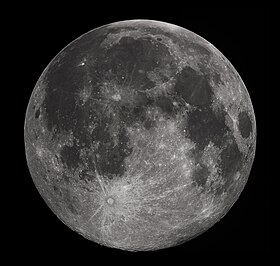
Full moon in the darkness of the night sky. It is patterned with a mix of light-tone regions and darker, irregular blotches, and scattered with varying sizes of impact craters, circles surrounded by out-thrown rays of bright ejecta.
Our very own moon, Luna
We are all used to looking up at the sky and admiring the moon. 'What a pretty moon', 'look how yellow the moon looks!' Or my favourite one as a young child in the car: 'Mom! The moon's following us!' 

For us on Earth, the moon is a normal feature of life. It's always there at some point or another. But imagine if we had no moon. The night sky may look a little bit less romantic, sailing would get a bit harder without a high tides and what would we ever do with our lives if we didn't have Taylor Lautner ripping his shirt off on our TV screens?

If the idea of a planet's night sky without a moon sounds lonely to you, fear not. All planets in our solar system, except Venus and Mercury, have moons. Which makes me feel very sorry for the two innermost planets in our solar system because what planet doesn't deserve a moon?! These things are awesome! 

Titan multi spectral overlay.jpg
A Cassini Image of Titan
(the blue tinge around the outside
of the moon is its dense
and thick atmosphere)
There's the moon Titan which orbit Saturn, where the pressure on the surface is so great that methane exists in liquid form, the moon has a water cycle using liquid methane. There's the moon Io which orbits Jupiter. The gravitational forces exerted on Io from Jupiter and its three largest moons (Ganymede, Europa and Callisto) cause Io to be extremely volcanic in an area of space where one may think not much goes on due to the fact temperatures can be, at their extremes, about -240 degrees Celsius. And last, but not least, there are the five known moons of Pluto, Charon, Nix, Hydra, Kerberos and Styx which orbit at the edge of our solar system. (On a side note, these name are all associated with Greek and Roman mythology and an interesting question is what are we going to do once we run out of Greek or Roman names for planets and moons?)

So how do moons form? Well, I was doing some research into how our moon formed on NASA's website. While NASA didn't seem to be able to tell me how our moon formed, it reliably informed me that, and I quote, 'The moon has no moons.' Thanks NASA, I never would have guessed that one. 

We don't have a confirmed theory for how our moon formed, but what we do have is a widely accepted theory. We believe the moon was created when a object about the size of Mars slammed into the newly formed surface of the Earth a few billion or so years ago. This turned the Earth molten again and material was ejected into space during the collision. Some of the material fell back to Earth but the rest of it collected together to form the moon. 

So that (kinda) explains the formation of our moon. For now we can't be sure how any moon forms, but what we can do is study them as much as possible. Which is where the proper fun starts. 

Planets come in wonderful, wild and wacky variations, rocky or gaseous, ringed or un-ringed, with atmospheres or exposed to space. But there are only eight planets (and a dwarf planet) in our solar system so we don't have very many to study (not that we need many more for the time being, we have our hands full with Saturn's rings, Mars' water and debating Pluto's place in life). However moons. Oh, beautiful and bizarre moons. There are 146 confirmed moons in our solar system and they are just as fascinating as any planet. 

My favourite moon? Enceladus. 
Photo: Lit by reflected light from Saturn, Enceladus appears to hover above the gleaming rings with its well-defined ice particle jets spraying a continuous hail of tiny ice grains, in this image taken by NASA’s Cassini spacecraft in 2006 from a distance of 1.303 million kilometers. 

Image Credit: NASA/JPL/Space Science Institute
A Cassini image of Enceladus
(note the faint but visible water jets
at the south pole of the moon)

This is the moon that sparked my interest in astronomy and space. And there's a good reason why it did. Not only do liquid water geysers shoot from its surface into space regularly, but it is thought to be what is forming the entire E ring of Saturn's rings. The whole ring is made up of debris that has come from Enceladus. This moon has a diameter of 504 Km, which is only slightly smaller than the length of the UK, and it's forming a ring  that is approximately 470,000km in diameter. It also has one of the highest albedos in our solar system (albedo is how reflective an object is) with an albedo of almost 100%. 

So these things make it pretty cool but what makes this planet amazing is that the liquid water present on Enceladus could be home to single celled organisms. When I tell people about this moon face to face   this is normally the point where I start flailing around like a five year old and talking faster and faster. You can see the effect it has on me. And you may think, 'So what? It's only single celled life. It's not like you just found E.T. or Spock.' But if we can find life present on two bodies in one solar system (on Earth and on Enceladus) then the chances of finding life in other solar systems increases a lot. If we find simple life in other solar systems eventually we simply have to find complex life.

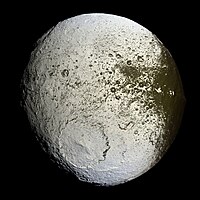
A Cassini image of Lapetus
(the dark patch on the right is the
 beginning of the black part of the moon)

Moons are wonderful things because of the variety in our solar system.

In our solar system moons are much more common than planets and every single one is different. For example, the moons Lapetus and Nereid. Lapetus is half black and half white (quite literally), the black crust on one side of the moon only about a metre thick and is thought to have been swept up by the moon as it orbited Saturn.

In contrast Nereid has the most eccentric orbit of any moon in the solar system, it flies out more than 9 million kilometres from Neptune before swooping within 1.4 million kilometres of its parent planet. Nereid would not be unusual in this respect however moons which have eccentric orbits similar to the orbit of this lumpy moon are normally asteroids or comets which have been captured by their parent planet's gravity. Nereid does not share this trait, its composition doesn't resemble that of the various comets are asteroids in our solar system. While we believe that Nereid formed from the disc of leftover material orbiting Neptune after the planet's creation, its bizarre orbit is still a mystery to us.

Even our moon which is so familiar to us, Luna, has its own mysteries. It is unusual in its comparatively immense size. Mercury and Venus don't even have moons and Mars' moons are blips in comparison with our beloved Luna.

We simply don't get the same variety in planets that we do in moons at the moment. Moons are a hell of a lot more accessible than planets are due to the fact that after we reach eight planets (and a dwarf planet) the nearest known exo-planet is about twelve light years away from our solar system. You may think 'Twelve?! Doesn't sound so bad!' But light travels 299,792,458 metres per second (yes, I know that number off by heart) meaning that one light year is a distance of 9.5 trillion kilometres. It is hard to comprehend a distance that large.

The nearest moons to us, after Luna, are a mere 56 million kilometres away from Earth and orbits around Mars (Phobos and Deimos).

So the conclusion you should take away from this is that moons are awesome and not to be under-appreciated. They come in so much amazing variety and can teach us so much about the world around us and the universe we live in.

So next time you see the moon gracing the sky above you, give it some love would you?


Monday, 6 October 2014

My Plea to Scientists Everywhere. 


I am a physicist. An astrophysicist. I am interested in space, planets, moons, stars, galaxies, cosmology, SETI, etc. What's on Earth isn't as important to me as knowing what's in our universe! Palaeontologists, anthropologists and doctors, I think what you do is incredible and fascinating. But it's not for me. 

Hubble Mosaic of the Southern Pinwheel
Hubble view of M83
Spending a week surrounded by biochemists, biologists, neuroscientists and medical students during my work experience at The Lancet, and a week surrounded by Robotics professors at the Royal Institution helped make me even more sure that I know exactly what area of science I want to go into. However it also showed me a different side to science. 

Science is made up of everything we see around us. The Oxford Dictionary definition of 'science' is: 'The intellectual and practical activity encompassing the systematic study of the structure and behaviour of the physical and natural world through observation and experiment.' 

Knowledge Tree by usaswim
A Tree of Science
Basically, thinking, testing and proving your ideas of how the physical and natural world works through experiments and observations. This covers from astrophysics to pathology to geology to physiology to plant sciences to material sciences to genetics to earth sciences to zoology. These branches of science come from biology, chemistry and physics. Some jump back and forth across the boundary of physics and chemistry, like material sciences, others leap into geography, like earth sciences and geology. But all of them are encompassed under the idea that science is a study of how our world works. 

I have found that often physicists will mock biologists, saying their science is the easy one (I should know, I've done it) when it most definitely isn't. I have been to university level biochemistry lectures. It is not easy. While I haven't heard any mockery of physics (yet.) it is probably out there. It just shows one of the ways in which we have taken this huge, wonderful topic 'science' and have split it and boxed it off into little sections. 

I would like to try and help our generation understand that biology, chemistry and physics aren't separate. They're just different sides of the same die. When we understand that I believe we will be able to make more breakthroughs in science and make more progress towards solving the problems which fascinate us. We will be able to bring the strands of all of the sciences together and weave them into a huge picture of what our universe is, from the tiniest atom to the largest elephant. 

So my plea to scientists everywhere: Don't discount scientific disciplines which aren't your own. Don't raise others to mock biology or call geology boring. Don't let people dismiss theories which aren't their own unless there is solid proof to disprove said theories. It is so important for us to all acknowledge each other and each others ideas, to work together to help put together how this wonderful puzzle of a world works. 

If we don't work together I have a feeling we're going to lose one of the puzzle pieces under the sofa of ignorance and we all hate that feeling of a permanently incomplete puzzle.  

The Time I Spent a Week Surrounded by Biochemists talking about Pallidal Neurostimulation. 


Through my dad I have had the most amazing experiences. He introduced me to ice cream at the age of two, got me into fencing at age 14, has taken me to meet Brian Cox and has shared with me many a good movie.

Last summer, through his work, he gave me the amazing opportunity to do a week of work experience at one of the most prestigious journals there is: The Lancet.

Now many biologists reading this may have this reaction: 'Oh my God, how did you get that?! You don't even want to read biology at university!'

And you would be right.

While I think biology is cool, I don't have too much interest in reading biology or biochem at university. So for me The Lancet was a way to go and experience what the rigorous process which articles go through before they reach the pages of The Lancet.

The-Lancet-2006-03-17-cover.gifI spent the week learning how the journal worked, from the editors who sat around me rapidly typing statistics and very scientific language into English that most people can read, to the PR people who organise press releases for scientists who have discovered new and amazing things.

I learned how The Lancet receives hundreds of papers every week and has to sift through them all to find the diamonds in the rough. They can then spend weeks polishing that diamond as they correspond back and forth with the writers of the paper to make the paper into the best it can be. After each edit the paper has to be sent for peer review. This is when a group of people read the article and tell the journal what they think of it, how accurate it is and how relevant it is to the journal. If the peer reviews say things need to be changed then those things need to be changed by the editors who have to contact the authors to make the changes. Once these changes are made the papers are sent to peer review who then send them back...

As you can see it's an endless process of compromise to make everyone happy.

The opportunity was incredible, and I thoroughly enjoyed the experience. Though I would have enjoyed it more if I hadn't had a cold that made me feel like death warmed up.

I wrote a blog piece for The Lancet Student ranting about how horrible it was to be working at such an amazing medical journal and to have a cold. Because none of the Editors were working on articles on how to cure the common cold and as I was snuffling into far too many tissues I felt very depressed
The experience was fascinating, it exposed me to a different part of natural sciences. (Another blog piece will follow about my view on our splitting of science)

The chance to get work at any journals is fantastic for scientists. It gives you the opportunity to see what processes you will need to go through to get your journals published if you are a researcher in the future. Whether you want to do material sciences or biochemistry, work experience at a journal whether or not it focuses on your area of interest looks good on a CV.

And who knows? You may go into a work placement wanting to be a neurologist and come out fascinated by chemical engineering!


Tuesday, 30 September 2014

The Time I Spent a Week at The Royal Institution and Destroyed My Nails.

Phew, school is driving me insane but I thought I'd set some time aside to talk about a wonderful week I spent at the Royal Institution (RI) destroying my nails and my mind (for very different reasons). 

Rosetta and Philae Lander
I came off a trans-Atlantic flight and was excited for the next day. I was heading to the RI to spend a week doing an introduction to robotics course. While an aspiring astrophysicist the importance of the other sciences should not be ignored. Topics such as computer programming, robotics and geology are vital for understanding out universe. We need geology to understand other planets, asteroids and comets. We need computer programming to tell telescopes where to look in the sky. We need robotics to build the brilliant robots which travel to other planets, such as the Mars Rover or the Philae Lander which will try to land on the comet 67P in the next few months. Without the other disciplines astrophysics would be much harder to comprehend and it is easy to forget that while we call the subject astrophysics and label things as work physicists do and work biologists do, these subjects are all part of one massive subject: the natural world around us. 

Be Rational! Get Real! tshirtAnyway, I arrived on Monday just before 10 o'clock, pushing the boundaries of being late (as I normally do) and sat down at a table with three girls. I came to know that they were in the year below me and quickly figured out they were all geeks like me (thank heavens). Astrid, Luciana and Mollie were brilliant to work with (and guys my part of the project is almost done, I promise) and between us we had a fantastic array of geeky t-shirts. But I think prize for the geekiest t-shirt goes to a boy who wore one in which pi was telling an imaginary number to get real and the imaginary number was retorting by telling pi to be rational. 

We got to work on our two projects before long, one was to build a robot which could eventually go underwater and use a claw to pick things up, the other was very free and my group decided to build a robotic hand. We soon discovered the menace of the week: the elements game. About 11 elements have been discovered at the RI and to promote this the Institution have come up within a game in which you have to find the elements on a massive periodic table while The Elements Song by Tom Lehrer plays in the background. Oh the tune was fun at first, but by the end of the week whenever it came on all forty of the teenagers in the room would wince and then share a collected laugh of 'thank goodness it's getting to everyone else too!' 

We named our underwater project Enterprise (because why not?!) and our robotic claw was dubbed S.P.O.C.K (Special Purpose Operating Colour Koordinator) . 
Enterprise Mark VI

We started off Enterprise with Mark I and I believe got to about mark XI or XV before we were done. We went easy to begin with, testing gear ratios and what materials from our LEGO kits floated best to begin with and expanded it to something which could eventually sink to the bottom of the pool and then resurface and then added a working claw to it! We controlled it with battery packs from the side lines and at the end of the week did a challenge to see who could pick up the most balls. And while the group who won (they'd named their robot a mix of a scorpion, lobster and crab I believe, though I can't quite remember how they combined the names into one ) retrieved about 14 balls, my group and I were rather proud of the 6 we got. We were so close to getting 7 but off all the times for the claw not to work that was one of them so we shared third place... Willingly of course. 

Our claw was another story. The head of the camp worked at one of the UK's big robotics universities and was doing research into robots that could be used to clear up nuclear waste and had promised any one who tried a claw some extra assistance. No one in my group had used LEGO before for building robots so were rather relying on a bit of assistance to get us started off, on Thursday morning (we had to be done by Friday morning at the latest) when half of the claw was assembled and half the arm was done he comes by our table and says '... That won't work the moment caused by the arm will be too big' (when I say 'moment' here I mean the physics kind, as in a turning force, though our robot actually working definitely made us have a moment) and takes the work I'd just spent two hours on to pieces in about three seconds.

I felt like crying because I hadn't considered moments and because he'd just deconstructed my child. However, he proceeded to help Mollie and Luciana building the claw while Astrid and I worked on the programming for S.P.O.C.K as we'd decided he would be an autonomous robot (i.e he would be able to work on his own without someone controlling him). We programmed S.P.O.C.K to search for a yellow object, pick it up, and move it to a different location before continuing his search.
S.P.O.C.K - My pride and joy

It took a lot of work but the incredible feeling when S.P.O.C.K picked up a yellow block, moved it and then kept searching for the next one was the most wonderful thing! This robot became our child for a week. Good Lord, it was so depressing when about two hours after getting S.P.O.C.K to work properly for the first time after all of our hard work building him (with a bit of help from our supervisor of course) we had to take him to pieces.

We had to disassemble Enterprise as well, I think all of the groups were crying inside as they tore apart their creations.

I left on Friday with many new skills learned and friends made and the sound of 'there's antimony, arsenic, aluminium, selenium and hydrogen and oxygen and nitrogen and rhenium' ringing in my ears. 

While the week destroyed my finger nails (they're still recovering now) and drove me insane as I sat staring intensely at S.P.O.C.K thinking 'Why won't you work?!?' It was a brilliant experience which gave me the confidence to start a robotics club at my school for which I had 16 pupils show up! 

I recommend this course, and robotics in general, to people interested in science. Robotics has so many uses in biology, chemistry, physics, maths and in everyday life that this is well worth a look at. S.P.O.C.K could have been used for sorting your darks and lights in laundry, or getting rid of that flavour of Skittle you just can't stand. You may get into Robotics and find that you want to do a degree in it! (Which is a brilliant idea, we need as many people working in STEM as we can get).

Unfortunately this course is not free and I had the opportunity to go to it because I am a Faraday member of the RI, however membership for under 25s is only £15 a year and there are lots of opportunities for courses and lectures through that membership.

I even get the chance to apply for a Silver Crest award for my work during the week on Enterprise and S.P.O.C.K! (That is if I ever finish my part of the project...)